블로그

  • 28 The Pay-for-Delete Settlement Strategy: Credit Guide

    The Pay-for-Delete Settlement Strategy
    Utilizing The Pay-for-Delete Settlement Strategy ensures that debt collection records are completely removed from your credit reports upon payment.

    The Pay-for-Delete Settlement Strategy is the single most effective yet vastly misunderstood negotiation framework available to consumers who are striving to eliminate derogatory collection accounts from their credit profiles. Few financial experiences are as deeply disheartening and infuriating as making the ultimate personal sacrifice to save money, paying off a collection agency in full, and then watching in disbelief as your credit score remains completely broken.

    Millions of hardworking Americans fall into this exact psychological trap every single year. They naturally assume that taking responsibility and paying off an old debt balance will automatically clean up their credit history and restore their financial dignity. Unfortunately, standard traditional credit scoring algorithms—such as FICO 8—treat a “Paid Collection” record almost identically to an “Unpaid Collection” record. The severe penalty remains, leaving you feeling helpless, mentally exhausted, and financially drained—having surrendered your hard-earned cash while achieving zero credit score recovery.

    “Surrendering money to a debt collection agency without securing a prior legal deletion contract does not repair your credit standing. True financial recovery requires negotiating the absolute removal of the credit entry in exchange for your payment.”

    Understanding the Pitfall: Option A vs. Option B

    When confronting debt collectors, the long-term impact on your financial trajectory depends entirely on your negotiation strategy prior to transferring any funds:

    • Option A: Unconditional Payment (The Fatal Pitfall): You call the collection agency, negotiate a payment over the phone, and send the money without a written deletion guarantee. The collector updates the tradeline balance to zero dollars and marks the status as “Paid Collection.” However, the underlying negative mark remains embedded in your credit history for up to seven years, severely suppressing your FICO score and blocking you from securing home mortgages, auto loans, or favorable credit cards.

    • Option B: The Pay-for-Delete Settlement Strategy (The Solution): You leverage your monetary payment as maximum bargaining power. You strictly refuse to release a single dollar until the collection agency signs a formal, written agreement pledging to submit an immediate, complete deletion request to Experian, Equifax, and TransUnion upon receipt of the agreed funds.

    The 4-Step Sequential Solution to Erase Collections

    To successfully execute The Pay-for-Delete Settlement Strategy without falling victim to unfulfilled verbal collection promises, follow this strict, four-step chronological protocol:

    Step 1: Establish Absolute Legal Verification

    Before offering any monetary settlement, you must verify that the collection agency possesses legal title to the debt and that the obligation is valid. Always initiate The Debt Validation Demand to ensure the debt is completely accurate and has not exceeded the expiration limits outlined under The Statute of Limitations Shield.

    Step 2: Conduct Written-Only Negotiations

    Never negotiate settlement agreements over the phone, as oral promises made by collection representatives are legally unenforceable and impossible to verify. Send a written settlement proposal via certified mail offering a realistic lump-sum payment—typically between 30% and 50% of the reported total—strictly contingent upon their binding promise to completely purge the tradeline from all credit bureaus.

    Step 3: Secure an Executed Written Contract

    Do not transfer any funds under any circumstances until you receive a physical letter printed on official company letterhead, signed by an authorized collection manager, explicitly stating: “In consideration of the agreed payment of $X, our agency agrees to request the permanent deletion and removal of this entire account entry from Experian, Equifax, and TransUnion within 30 days.” For additional guidance on consumer rights during debt settlement, consult official regulatory frameworks provided by the Consumer Financial Protection Bureau (CFPB).

    Step 4: Execute Payment via Secure Cashier’s Check

    Submit the agreed funds using a secure cashier’s check or certified money order. Never provide personal check details, direct debit information, or credit card numbers, as collectors can misuse this access. Retain copy receipts of the payment and audit your credit reports 30 to 45 days later to confirm total deletion.

  • 27 The Statute of Limitations Shield: Time-Barred Debt

    The Statute of Limitations Shield
    Deploying The Statute of Limitations Shield prevents predatory debt collection agencies from legally suing or collecting on expired, time-barred debts.

    The Statute of Limitations Shield represents the ultimate legal expiration boundary that permanently converts ancient, unpaid debt into uncollectible “time-barred debt” under U.S. state and federal commercial laws. Every single financial obligation carries a strict legal countdown timer governed by state statutes. Once that statutory clock runs out completely, third-party debt collectors and original creditors lose their legal right to file a lawsuit or threaten wage garnishment against you in a court of law. Understanding how your financial past, present strategic decisions, and future wealth trajectory interact with state statutes of limitations is a foundational requirement for achieving true financial independence.

    “A financial obligation does not legally exist in perpetuity. Once the statutory expiration clock runs out, federal and state laws strip debt collection agencies of their legal remedies, transforming aggressive financial claims into completely unenforceable ghosts.”

    Chronological Breakdown: Navigating Debt Across Time

    1. The Past: The Date of First Delinquency (DOFD)

    The lifecycle of any delinquent financial obligation begins in the past with one single foundational metric: the Date of First Delinquency (DOFD). This precise calendar date represents the exact month and year you first missed a payment and never subsequently brought the account back to current status.

    Under the federal Fair Credit Reporting Act (FCRA), the DOFD triggers a strict seven-year clock governing how long a negative entry can legally remain on your credit reports. Simultaneously, individual state contract laws establish a separate Statute of Limitations—typically ranging between three to ten years depending on your state of residence—governing how long a creditor has the legal right to file a lawsuit against you to collect that balance.

    2. The Present: Identifying and Stopping Zombie Debt Collectors

    In the present stage, predatory secondary debt buyers routinely purchase portfolios of charged-off accounts for pennies on the dollar and attempt to resurrect them through aggressive tactics. This predatory financial practice is commonly referred to as “Zombie Debt.” When a collection agency suddenly contacts you regarding an old, forgotten debt, your immediate decisions in the present determine your complete legal exposure and future financial health.

    • Option A: Re-aging the Debt (The Fatal Mistake): If you make even a tiny nominal payment of $5 or verbally acknowledge during a recorded phone conversation that the old debt belongs to you, you instantly reset the state statute of limitations clock back to zero in many legal jurisdictions. This catastrophic mistake revives the collector’s legal power to sue you.

    • Option B: Deploying The Statute of Limitations Shield (The Correct Strategy): Instead of making voluntary payments or discussing the account over the phone, you systematically audit the DOFD. If the state time limit has fully elapsed, you immediately dispatch a formal cease-and-desist letter asserting that the account is legally time-barred under state laws and federal regulations enforced by the Federal Trade Commission (FTC).

    3. The Future: Rebuilding Total Financial Sovereignty

    Once The Statute of Limitations Shield is formally asserted, your future financial trajectory changes completely. The debt collection agency is legally forbidden from threatening litigation or placing further collection demands on you. Furthermore, as the seven-year FCRA window expires, the underlying account must be permanently deleted from your Experian, Equifax, and TransUnion credit files.

    By seamlessly integrating this time-tested defense with administrative strategies like The Debt Validation Demand, you ensure that old financial mistakes can never anchor your long-term wealth accumulation, unlocking the path toward elite FICO scores and financial freedom.

  • 26 The Debt Validation Demand: FDCPA Legal Guide

    The Debt Validation Demand
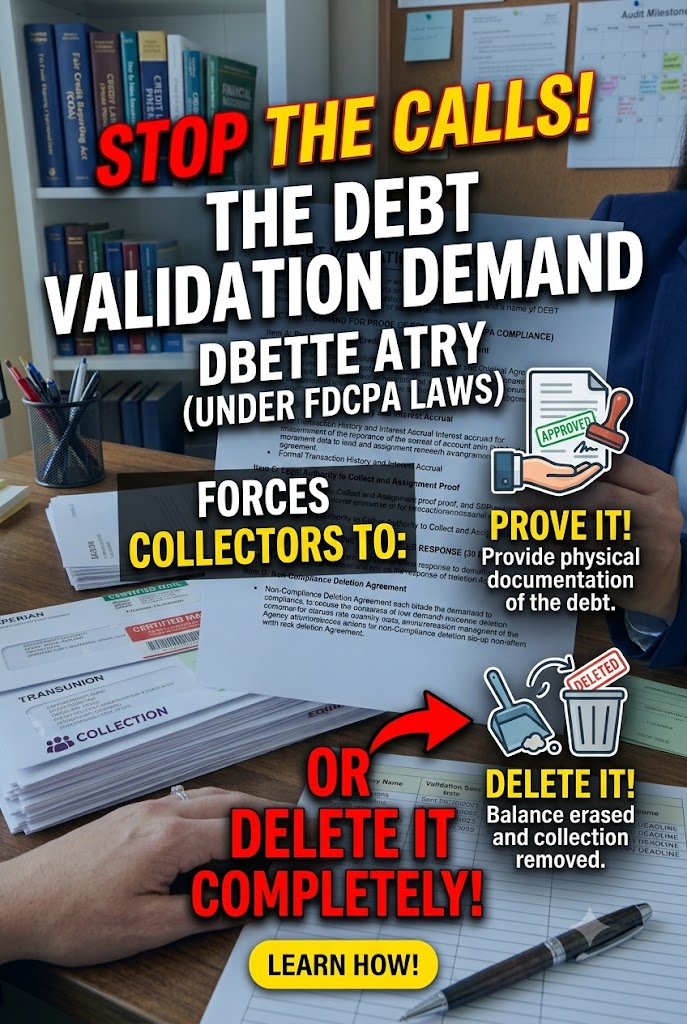
    Issuing a formal Debt Validation Demand forces third-party collection agencies to physically prove account accuracy or delete the balance entirely.

    WASHINGTON, D.C.The Debt Validation Demand remains the primary legal weapon guaranteed to American consumers under the Fair Debt Collection Practices Act (FDCPA) to force third-party debt collectors to halt collection activities or physically prove the legitimacy of an alleged debt. According to legal experts and federal financial regulatory frameworks, an estimated 40% of collections purchased by debt buyers contain inaccurate balances, expired statutes of limitations, or incorrect consumer identity details. Understanding how to exercise this statutory right under federal law determines whether a consumer pays an unverified debt or successfully forces a complete account deletion.

    “Under federal law, third-party debt collectors carry the strict burden of proof. A consumer is never legally obligated to pay a collection agency until the collector provides original, itemized physical verification.”

    5W1H Analysis: The Mechanics of The Debt Validation Demand

    • WHO (Target & Beneficiary): Third-party debt collection agencies acting as buyers of charged-off consumer debt are the targets. Individual consumers facing collection calls, demand letters, or collection entries on their credit reports are the primary beneficiaries.

    • WHAT (The Legal Remedy): The Debt Validation Demand is a formal, written notice invoking Section 809(b) of the FDCPA. It legally compels a collection agency to cease all contact and provide physical documentation verifying the original debt balance, the original creditor’s identity, and proof of legal authority to collect.

    • WHEN (The Statutory Window): Consumers must dispatch this formal demand within exactly thirty (30) days of receiving the initial written notice from a collection agency. Invoking this right within the 30-day window triggers an absolute legal freeze on collection attempts.

    • WHERE (Jurisdiction & Enforcement): Enforced across all fifty U.S. states under federal jurisdiction monitored by the Consumer Financial Protection Bureau (CFPB).

    • WHY (The Financial Protection): Collection agencies purchase portfolios of delinquent debt for pennies on the dollar, often receiving incomplete digital spreadsheets lacking original signed contracts or complete accounting ledgers. Demanding physical validation exposes these evidentiary gaps.

    • HOW (Execution Strategy): Sent via U.S. Postal Service Certified Mail with Return Receipt Requested to establish verifiable proof of delivery and start the statutory compliance timeline.

    Option A vs. Option B: Oral Disputes vs. Written Statutory Demands

    When confronted by debt collectors, consumer outcomes are dictated entirely by whether they rely on informal verbal communications (Option A) or formal statutory demands (Option B).

    Option A: Informal Phone Disputes

    • Legal Standing: Phone calls do not preserve legal rights under FDCPA Section 809(b).

    • Collector Response: Collection representatives routinely use aggressive tactics to secure partial payment promises, which can legally restart expired statutes of limitations.

    • Outcome: Collection calls continue, and negative credit marks remain intact on consumer credit profiles.

    Option B: Written Debt Validation Demands

    • Legal Standing: Triggers a mandatory freeze on all collection efforts under federal law until full written validation is provided.

    • Collector Response: Collectors must either locate original documentation from the primary creditor or permanently close the file and delete credit bureau reporting.

    • Outcome: Unverified debts are permanently removed, and consumer rights remain fully protected under federal statutes.

    Strategic Implementation and Escalation

    To maximize effectiveness, consumers must combine The Debt Validation Demand with established administrative protocols like The Bureau Audit Protocol. If a debt collection firm fails to provide itemized verification yet continues to report the debt to Experian, Equifax, or TransUnion, they commit a direct violation of federal law.

    In such instances, submitting certified copies of the delivery receipt and non-compliance notice to federal regulators forces immediate administrative remedies and potential monetary statutory damages for the consumer.

  • 25 The Bureau Audit Protocol: 5-Step Credit Audit Guide

    The Bureau Audit Protocol
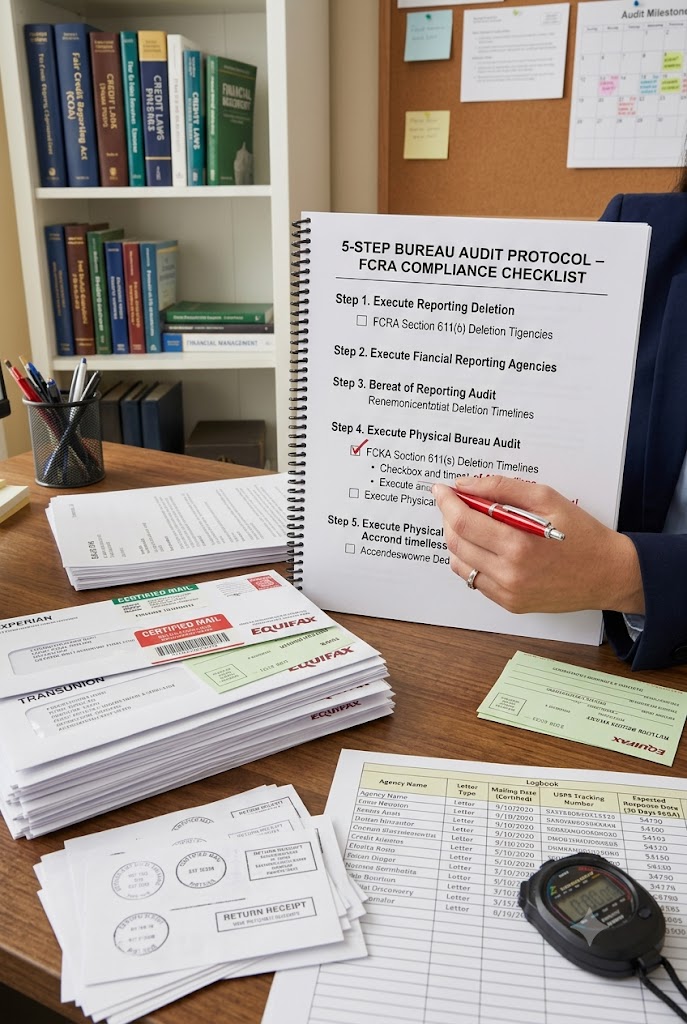
    Executing a physical 5-step bureau audit protocol forces credit reporting agencies to adhere strictly to federal FCRA deletion timelines.

    The Bureau Audit Protocol is a systematic, law-backed checklist designed to force Experian, Equifax, and TransUnion to remove inaccurate, outdated, or unverified negative items from your credit profile. Most consumers fail at credit repair because they rely on convenient, bureau-provided online dispute portals. Credit bureaus intentionally design online portals to convert your legal rights under the Fair Credit Reporting Act (FCRA) into standardized, automated dispute codes that an AI algorithm can dismiss in seconds. To achieve real results, you must replace passive online complaints with a rigorous, legally binding postal dispute method.

    “Online dispute portals are trap doors designed to protect credit bureaus from lawsuits. A physical, certified audit letter sent directly to their legal departments is the only language credit agencies truly respect.”

    Option A vs. Option B: Online Portals vs. Certified Audit Letters

    Understanding why The Bureau Audit Protocol requires physical paper documentation comes down to analyzing how credit reporting agencies handle consumer disputes.

    • Option A: Online Dispute Portals (The Bureau Shortcut): When you click “Dispute” on a credit bureau app, you agree to updated terms of service that often limit your legal remedies. Your detailed claim is instantly condensed into a 2-digit e-OSCAR code (e.g., “Not his/hers”). No human reviews your attached evidence, and the bureau simply sends an automated ping to the creditor.

    • Option B: Certified Mail Audit Letters (The Legal Protocol): When you mail a physical dispute package via Certified Mail with Return Receipt Requested, you establish an undeniable paper trail. Under FCRA Section 611, the credit bureau has exactly 30 calendar days from the date of physical receipt to perform a reasonable investigation. If they fail to provide written verification from the original creditor, federal law mandates the complete deletion of the negative account.

    The 5-Step Bureau Audit Protocol Checklist

    Step 1: Request Unsurpressed Physical Credit Disclosures

    Obtain your official credit reports directly from AnnualCreditReport.com or by physical mail request. Do not rely on third-party credit monitoring apps, as they omit essential backend data such as specific furnisher addresses, internal account identification codes, and exact removal dates.

    Step 2: Conduct an Accuracy and Compliance Audit

    Line up your reports from all three bureaus and highlight every discrepancy. Verify account numbers, date of last activity, original balance, historical payment status, and debt collector designations. Under federal law, even a minor clerical error—such as an incorrect open date—invalidates the entire entry.

    Step 3: Prepare the Formal FCRA Dispute Package

    Draft a targeted dispute letter for each bureau. State clearly that you are invoking your rights under FCRA Section 611. Identify each disputed item separately, explain the exact factual error, and demand complete deletion or physical proof of verification. Attach supporting documents, such as paid receipts or identity verification, but never send original copies.

    Step 4: Dispatch via Certified Mail with Return Receipt

    Send your audit package strictly via U.S. Postal Service Certified Mail with Return Receipt Requested. This physical green card (or digital delivery signature) serves as legal proof of the exact date the bureau received your demand, starting the strict 30-day statutory clock mandated by the Consumer Financial Protection Bureau (CFPB).

    Step 5: Enforce Compliance or Escalate to Federal Agencies

    Once the 30-day window expires, analyze the bureau’s response. If they delete the negative item, update your records. If they claim the account was “verified” without providing physical proof from the creditor, or if they ignore your deadline, immediately file a formal complaint with the CFPB and your State Attorney General.

    By rigorously executing The Bureau Audit Protocol alongside existing safeguards like The Credit Freeze Shield, you shift the legal burden of proof back onto the credit bureaus and secure the high FICO score you deserve.

  • 24 The Credit Freeze Shield: Freeze vs Lock Guide

    The Credit Freeze Shield
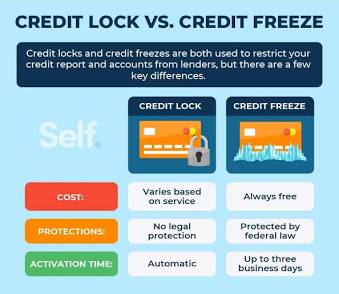
    Choosing a legally binding security freeze over a commercial credit lock guarantees maximum protection for your identity and credit score.

    The Credit Freeze Shield represents the single most powerful legal mechanism available to American consumers to completely block unauthorized credit access, stop identity theft, and prevent hard inquiries without lowering your FICO score. Yet, millions of consumers remain confused about how to properly secure their credit files. Major credit bureaus—Equifax, Experian, and TransUnion—aggressively market commercial “Credit Lock” subscriptions as conveniencies, while hiding the true federal remedy: a statutory Security Freeze. Understanding the profound systemic differences between a commercial Credit Lock (Option A) and a federal Security Freeze (Option B) is essential to protecting your long-term financial sovereignty.

    “A commercial Credit Lock is a profit-driven contract that protects the credit bureau’s liability. A federal Security Freeze is a statutory right that puts absolute legal liability on the bureau if unauthorized access occurs.”

    Option A vs. Option B: Breaking Down the Structural Differences

    To appreciate why The Credit Freeze Shield must be your default defense strategy, you must evaluate the legal and financial terms governing commercial locks versus statutory freezes.

    Option A: The Commercial Credit Lock

    • Legal Protections: Governed purely by private terms of service contracts written by the credit bureaus. These agreements almost always contain forced arbitration clauses and class-action waivers that strip away your right to sue the bureau if a data breach occurs.

    • Financial Cost: Frequently bundled into monthly paid subscription packages ranging from $19.99 to $29.99 per month.

    • Regulatory Oversight: Zero federal statutory mandate. If the bureau’s app glitches and allows a fraudulent loan to go through, you have limited legal recourse under contract law.

    Option B: The Federal Security Freeze

    • Legal Protections: Backed directly by federal law under the Economic Growth, Regulatory Relief, and Consumer Protection Act. If a credit bureau allows an unauthorized credit pull while your freeze is active, the bureau faces strict legal liability and federal regulatory penalties.

    • Financial Cost: Guaranteed 100% free by federal law across all three major credit reporting agencies.

    • Regulatory Oversight: Strictly regulated by the Federal Trade Commission (FTC), ensuring that bureaus must freeze or unfreeze your credit within specific, legally mandated timeframes upon receiving your request.

    Why You Must Insist on The Credit Freeze Shield

    My position on this matter is absolute: you should never pay a credit bureau a recurring subscription fee to protect data they collected from you without your explicit original consent. Commercial Credit Locks are cleverly designed marketing traps intended to monetize consumer anxiety while shielding corporations from liability.

    By contrast, deploying The Credit Freeze Shield grants you absolute legal immunity against fraudulent debt creation.

    When your credit file is frozen under federal law, third-party lenders are completely blocked from pulling your credit report. Because financial institutions will not extend new credit lines without inspecting your FICO score and inquiry history, identity thieves are rendered completely powerless—even if they possess your Social Security number and date of birth.

    Furthermore, activating The Credit Freeze Shield works in perfect harmony with optimization strategies like Credit Mix Mastery. Freezing your credit does not alter your account age, lower your available limits, or interfere with ongoing automated payments. It simply puts your credit profile into an unassailable vault.

    How to Deploy Your Defense in 3 Steps

    1. Access Official Channels: Visit the dedicated security freeze web portals for Equifax, Experian, and TransUnion. Avoid clicking on paid identity theft subscription banners.

    2. Secure Your Personal PINs: Set up robust passwords and store the provided personal identification numbers (PINs) or unfreeze keys in a secure password manager.

    3. Unfreeze Temporarily When Applying: When you actively choose to apply for a mortgage, car loan, or new credit card, perform a temporary “lift” specifying the exact number of days or the specific lender. Once approved, your profile automatically locks back down under full federal protection.

  • 23 Credit Mix Mastery: Optimize Accounts for 800+ FICO

    Credit Mix Mastery represents the most overlooked 10% of your FICO score calculation: the strategic balance

    between revolving accounts (credit cards) and installment loans (mortgages, auto loans, personal loans). Many consumers asking how to break past the 750 score ceiling often wonder: 1) Why isn’t having multiple credit cards enough for an 800+ credit score? 2) How many different types of credit accounts do lenders actually want to see? 3) Does taking out an installment loan purely for credit building make financial sense? 4) How does credit mix interact with credit utilization and payment history? 5) What is the safest blueprint to achieve optimal credit diversity without paying unnecessary interest?

    This comprehensive guide answers all five questions to help you unlock peak credit scoring algorithms.

    “A flawless payment history with only revolving credit cards is like building a house with a strong foundation but no walls. Lenders need to see how you manage different financial structures under varying risk environments.”

    Question 1: Why Isn’t a Flawless Credit Card Portfolio Enough?

    Credit card accounts represent revolving debt—borrowing limits that cycle month-to-month based on your spending. While managing credit cards proves your ability to handle short-term liquidity, major underwriters view revolving debt as fundamentally different from fixed installment debt.

    Without installment experience, scoring models treat your profile as untested against long-term financial commitments.

    Question 2: How Many Account Types Are Required for Credit Mix Mastery?

    Achieving Credit Mix Mastery does not require holding every financial product on the market. FICO algorithms reward profiles that contain at least two active categories:

    • Revolving Accounts: 2 to 4 credit cards managed at low utilization.

    • Installment Accounts: 1 active or open-and-closed installment loan (such as an auto loan, student loan, mortgage, or credit-builder loan).

    Question 3: Should You Take Out a Loan Just to Boost Your Credit Mix?

    You should never pay high interest rates solely for credit score optimization. However, if your portfolio lacks installment history, specialized tools like Credit-Builder Loans or Self Lender products allow you to deposit funds into a locked certificate of deposit (CD) while reporting fixed monthly installment payments to all three bureaus.

    This builds installment credit with virtually zero capital risk.

    Question 4: How Does Credit Mix Synergize With Other Scoring Factors?

    While Credit Mix Mastery accounts for 10% of your total score, it directly strengthens your overall risk profile.

    When combined with clean inquiry records achieved through The Hard Inquiry Wipeout and zero late payments, a diverse credit mix Signals to primary underwriters that you are a low-risk, versatile borrower capable of handling major mortgage or commercial debt.

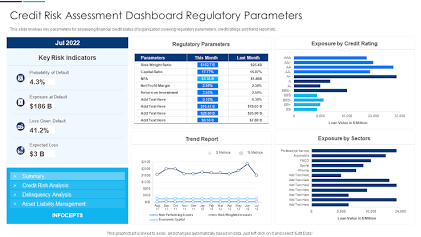
    A credit risk assessment dashboard showing credit score parameters and credit mix data
    Optimizing your Credit Mix Mastery requires a strategic blend of revolving accounts and installment loans to maximize your FICO score potential.

    Question 5: What Is the Step-by-Step Blueprint for Optimal Credit Diversity?

    To achieve optimal credit diversity smoothly, follow this three-stage implementation framework:

    1. Maintain 3 Core Credit Cards: Keep three revolving accounts open to anchor your average age of accounts and maximize available credit limits.

    2. Incorporate One Fixed Installment Account: Add an auto loan, mortgage, or a low-cost credit-builder loan to introduce structured installment history.

    3. Automate Micropayments: Ensure all accounts have automated monthly payments set up to protect your payment history while maintaining healthy account activity.

  • 22 The Hard Inquiry Wipeout: Erase Hard Pulls Fast

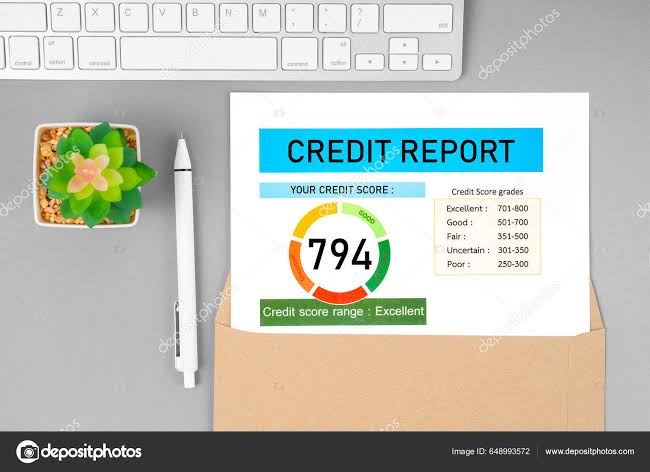
    A credit report document sitting on a desk with a keyboard and pen
    Disputing unauthorized or non-FCRA compliant hard inquiries forces credit bureaus to permanently remove score-damaging hard pulls from your profile.

    The Hard Inquiry Wipeout is the ultimate strategy to erase score-damaging hard inquiries from your credit profile after shopping for a mortgage, auto loan, or multiple credit cards. Consider the story of Alex, a first-time homebuyer who innocently applied for auto financing at a local dealership. Unknown to him, the dealer submitted his credit application to fourteen different lenders in a single afternoon. Within forty-eight hours, Alex’s FICO score plummeted by forty-five points due to an overwhelming stack of hard inquiries. When he applied for a mortgage three months later, his loan officer flatly rejected his application, citing “excessive credit seeking behavior.”

    Devastated but determined, Alex refused to let automated bureaucracy dictate his financial future.

    “Hard inquiries are not permanent scars on your financial identity. They are merely administrative logs—and under federal law, any log that lacks strict verification must be instantly erased.”

    The Protocol: Executing The Hard Inquiry Wipeout

    Alex began examining federal credit regulations and uncovered a powerful leverage point: the Fair Credit Reporting Act (FCRA) Section 604. Under this federal law, credit bureaus cannot list a hard inquiry unless they can provide written proof of explicit permissive purpose and absolute compliance with disclosure rules.

    He executed The Hard Inquiry Wipeout using a precise, three-step dispute method:

    • Step 1: Audit the Credit Report: Alex pulled official disclosures from Equifax, Experian, and TransUnion. He identified all inquiries not tied to an active, open account (such as auto dealer shotgun blasts or unauthorized credit card pulls).

    • Step 2: Freeze Secondary Consumer Reporting Agencies: Before sending dispute letters, Alex placed security freezes on Sagestream, LexisNexis, and Innovis. This prevented the major credit bureaus from automatically cross-referencing inquiry data through third-party databases.

    • Step 3: Mail Non-Permissive Purpose Dispute Letters: Alex sent certified letters directly to the fraud departments of Equifax, Experian, and TransUnion. He stated that the inquiries lacked valid written authorization under FCRA Section 604 and demanded immediate deletion or physical proof of his consent within thirty days.

    Within twenty-five days, all fourteen unauthorized hard pulls vanished from Alex’s credit files. His credit score rebounded instantly by forty-five points, and his home mortgage was officially approved.

    Conclusion: Key Lessons From The Hard Inquiry Wipeout

    Alex’s journey offers a critical financial insight for anyone navigating the American credit system: credit bureaus operate as data aggregators, not moral judges.

    When you challenge hard inquiries, the legal burden of proof lies entirely on the credit bureaus and the lenders. Lenders rarely retain signed paper consent forms for routine inquiry audits, making inquiries one of the easiest negative items to remove from your profile.

    By mastering The Hard Inquiry Wipeout, taking action after building on strategies like The Pay for Delete Hack, and enforcing federal compliance laws, you regain complete control over your credit score and unlock seamless access to major financial milestones.

  • 21 The Pay for Delete Hack: Erase Collections From Credit

    A debt settlement agreement document from a collection agency specifying pay for delete terms.
    Securing a signed Pay for Delete agreement before sending funds guarantees the debt collector legally removes the collection account from your credit files.

    The Pay for Delete Hack is the single most critical negotiation rule when dealing with collection accounts: never pay a single cent to a collection agency until you have a signed, written agreement stating they will completely erase the collection account from your tri-bureau credit reports. Simply paying off a collection account does not repair your credit score; it merely changes the status on your report from “Unpaid Collection” to “Paid Collection.”

    Both statuses are equally toxic to your FICO score, dragging your profile down for up to seven years even if you settled the balance in full.

    If you want to restore an 800+ credit score after a major default, the only acceptable outcome is absolute deletion.

    By taking a firm stance, executing The Goodwill Letter Strategy for active creditors, and leveraging The Pay for Delete Hack for third-party collection agencies, you force debt collectors to legally purge negative records in exchange for your capital.

    “A paid collection account is still a collection account. Lenders evaluate paid collections as proof of past default. To restore your credit score, you must negotiate for total record deletion, not status updates.”

    The Ultimate Playbook: Executing The Pay for Delete Hack

    Executing The Pay for Delete Hack requires strict discipline and written documentation. You must never negotiate over the phone or provide your personal bank account details to a collection agency.

    Follow this step-by-step protocol to secure a binding deletion agreement:

    • Step 1: Demand Debt Validation First: Before discussing any payment, send a formal Debt Validation Letter under FCRA and FDCPA laws. Force the collector to prove they own the debt and have the legal right to collect it.

    • Step 2: Propose the Pay for Delete Terms in Writing: Once the debt is validated, mail a formal offer letter proposing to pay 30% to 50% of the total balance in a lump sum. State clearly that payment is strictly contingent upon them signing an agreement to erase the account from Equifax, Experian, and TransUnion.

    • Step 3: Secure the Signed Contract: Never send money based on verbal promises from call center agents. Wait until you receive a physical letter on company letterhead signed by an authorized manager explicitly agreeing to the “Pay for Delete” terms.

    • Step 4: Remit Payment via Cashier’s Check: Pay the agreed amount using a cashier’s check or money order. Do not give them access to your personal checking account or debit card.

    Why The Pay for Delete Hack Works: The Business Economics of Collection Agencies

    The fundamental reason why The Pay for Delete Hack works lies in the business economics of the debt collection industry. Understanding this financial structure gives you total leverage during negotiations.

    Third-party collection agencies do not buy debt at face value.

    They purchase charged-off debt portfolios from original creditors (such as credit card companies or hospital networks) for pennies on the dollar—often between 2 to 7 cents per dollar of debt.

    If a consumer owes $1,000, the collection agency likely bought that account for $30.

    Because their acquisition cost is extremely low, a collection agency achieves massive profit margins even if you pay only 40% ($400) of the original debt.

    Furthermore, collection agencies have no legal obligation to keep reporting an account to the credit bureaus.

    Reporting data to credit bureaus costs collection agencies administrative fees and operational overhead.

    When presented with a choice between receiving $400 in liquid cash versus holding onto an uncollectible mark on an anonymous credit report, the economic incentive forces them to accept The Pay for Delete Hack and delete the file.

    Conclusion: Capitalize on Your Financial Leverage

    Rebuilding your financial standing after a default requires treating collection agencies as commercial counterparties rather than authority figures.

    By demanding total record deletion before releasing your capital, you transform a potentially damaging default into a clean slate.

    Protect your leverage, insist on written contracts, and erase negative marks to reclaim your financial freedom.

  • 20 The Goodwill Letter Strategy: Erase Late Payments Fast

    A formal goodwill letter sitting in an envelope next to a fountain pen on a wooden desk.
    A strategically written goodwill letter appeals directly to a credit lender’s human discretion to remove isolated late payment records.

    The Goodwill Letter Strategy is the most misunderstood weapon in credit restoration, defying the common belief that removing a late payment requires aggressive legal battles or paid credit repair agencies. Conventional internet wisdom insists that once a 30-day late payment hits your report, it becomes an unerasable stain that will ruthlessly drag down your FICO score for seven long years. Consumers are told their only recourse is to hire credit dispute lawyers or blindly bombard credit bureaus with rigid legal demands under FCRA laws, as explored in The Credit Mix Rule.

    However, this aggressive, litigious mindset fundamentally misunderstands how corporate credit departments operate.

    Credit card issuers and banks are not unfeeling code scripts; they are managed by human compliance officers who possess complete internal discretion to adjust your record.

    When an isolated late payment is the result of an unexpected life hardship rather than chronic irresponsibility, filing an aggressive legal dispute often backfires by forcing the bank to defend its record.

    By shifting your perspective from legal confrontation to human diplomacy, The Goodwill Letter Strategy unlocks a voluntary, goodwill adjustment that permanently erases late payment marks directly at the creditor level.

    “Banks do not erase late payments because you threatened them with a lawyer over a legitimate oversight. They erase them because you proved your long-term value as a customer and gave them a compelling, human reason to grant a favor.”

    The Psychology Behind The Goodwill Letter Strategy

    To understand why The Goodwill Letter Strategy succeeds where legal disputes fail, you must analyze the lender’s perspective. When you submit a formal legal dispute, the bank’s automated compliance system simply cross-references payment logs. If the log shows you were 31 days late, the dispute is rejected, and the negative mark is validated.

    In contrast, a goodwill letter bypasses the automated dispute desk and lands in the executive customer relations department.

    Instead of arguing whether the late payment happened, you openly acknowledge the error, explain the temporary hardship that caused it, and demonstrate that your account has been flawless ever since.

    Lenders spend hundreds of dollars in marketing to acquire a reliable customer.

    If a long-term customer with a strong payment history experiences a single job loss, medical emergency, or family crisis, the bank would rather grant a one-time adjustment than lose that customer’s lifetime business to a competitor.

    Structuring a High-Converting Goodwill Letter

    A successful goodwill letter avoids whiny excuses or demanding tones. It follows a precise, professional structure designed to make it effortless for a customer service executive to approve your request.

    Your letter must contain these four non-negotiable elements:

    • The Flawless History Highlight: Begin by stating how long you have been a loyal customer and emphasize your track record of on-time payments prior to the isolated incident.

    • Ownership and Accountability: Clearly take full responsibility for the missed payment. Do not blame the bank, the mail carrier, or technical glitches unless verifiable evidence exists.

    • The Temporary Hardship Context: Briefly explain the specific event that caused the oversight (e.g., medical emergency, bank transition during a move, temporary job disruption). Emphasize that the issue was resolved immediately.

    • The Future Value Promise: Reiterate that this was an isolated anomaly in an otherwise perfect relationship, and politely request a “goodwill adjustment” to remove the late payment mark as a courtesy.

    Routing Your Request for Maximum Approval

    Where you send your letter determines its success rate. Sending a goodwill letter to the standard billing address printed on your monthly statement often results in a generic rejection letter from a tier-1 customer service agent who lacks the authority to modify credit bureau reporting.

    To maximize your success with The Goodwill Letter Strategy, route your physical letter directly to executive offices or specialized departments:

    First, address the letter to the Chief Executive Officer (CEO) or the Vice President of Customer Experience at the bank’s corporate headquarters. Executive team assistants have the authority to route special requests directly to senior credit managers.

    Second, mail the letter using physical mail rather than sending an email or submitting an online portal ticket. Physical paper on executive desks receives significantly higher attention and empathy than digital form submissions.

    Conclusion: Reclaim Credit Integrity Through Diplomacy

    Rebuilding your credit profile does not always require hostile disputes or complex technical legalities.

    By mastering The Goodwill Letter Strategy, you turn a temporary setback into an opportunity to demonstrate financial maturity and accountability.

    Take control of your financial narrative, appeal to corporate human discretion, and erase isolated late marks to keep your FICO score climbing toward the elite tier.

  • 19 The Credit Mix Rule: Unlock an 800 FICO Score Fast

    the-credit-mix-rule-800-fico-score
    Legal Weight Scale with Credit Card – Colored Background – 3D Rendering

    The Credit Mix Rule is the hidden ceiling that keeps millions of hardworking young adults trapped in the mid-700s, feeling a quiet frustration as their credit scores stall despite years of flawless payments. You can pay every bill on time, aggressively execute The FICO Dispute Secrets to clean your history, and keep your balances near zero, yet still find yourself locked out of the elite 800-point club.

    It feels as though the algorithms are quietly moving the goalposts when you are so close to financial freedom.

    The reason for this invisible barrier lies in how scoring models evaluate your overall financial maturity.

    Lenders do not simply want to see that you can pay off a single credit card; they want to hear a complete financial symphony where you orchestrate different types of debt simultaneously.

    Understanding The Credit Mix Rule is the master key to breaking through that stubborn score ceiling and proving to major institutional lenders that you possess absolute financial control.

    “Credit algorithms do not reward monogamy with a single credit card. They reward the proven ability to balance revolving lines of credit alongside structured, long-term installment accounts.”

    Why The Credit Mix Rule Controls 10% of Your FICO Score

    To understand how The Credit Mix Rule shapes your financial standing, you must examine how FICO scoring engines assign risk. While payment history (35%) and credit utilization (30%) form the heavy foundation of your profile, credit mix accounts for a crucial 10% of your total score.

    That 10% represents roughly 55 to 80 points—the exact margin separating a good 740 score from an elite 800+ profile that unlocks the absolute lowest mortgage and auto loan interest rates in the nation.

    Lenders view a consumer with only credit cards as a single-dimensional risk.

    When you demonstrate mastery over The Credit Mix Rule, you prove to the scoring algorithms that you can manage two fundamentally distinct financial obligations:

    • Revolving Credit: Open-ended credit lines such as credit cards and store cards where monthly payments fluctuate based on your spending choices.

    • Installment Credit: Fixed-term loans such as auto loans, student loans, personal loans, and mortgages where you pay a fixed dollar amount every month over a set period.

    A borrower who handles both revolving cards and an installment loan without missing a beat signals high structural stability, prompting the algorithm to boost their overall credit score.

    Mastering The Credit Mix Rule Without Taking On Dangerous Debt

    A common anxiety among young adults is believing that satisfying The Credit Mix Rule requires taking on thousands of dollars in high-interest consumer debt or buying a vehicle they do not need.

    This is a dangerous misconception.

    You never need to pay unnecessary interest fees to build an elite credit profile.

    Instead, you can leverage strategic, low-cost financial tools designed specifically to optimize your loan portfolio.

    If your profile consists purely of credit cards, you can activate a Credit Builder Loan through a local credit union or an online fintech provider.

    With a credit builder loan, the lender places the borrowed amount (typically $500 to $1,000) into a locked savings account while you make small, manageable monthly payments over 12 to 24 months.

    Each on-time payment is reported to Equifax, Experian, and TransUnion as an active installment loan.

    Once the term ends, the locked funds are returned to you, effectively adding a flawless installment account to your history for a negligible administrative fee.

    Strategic Portfolio Architecture for The Credit Mix Rule

    To build an impenetrable credit foundation, your long-term goal should be a balanced financial portfolio that naturally satisfies scoring requirements.

    An optimal credit mix architecture generally includes:

    • 3 to 5 Revolving Credit Cards: Providing high total credit limits, low overall utilization, and deep account age.

    • 1 to 2 Active or Satisfied Installment Accounts: Such as a past student loan, a credit builder account, an auto loan, or a primary mortgage.

    By establishing this diverse foundation, your profile remains resilient even during economic volatility.

    You transform your credit report from a simple ledger into a sophisticated financial resume that commands respect from major institutions.

    Conclusion: Elevate Your Profile Beyond the 700s

    Ultimately, conquering The Credit Mix Rule is about refusing to let an incomplete financial record hold your wealth building back.

    By strategically blending revolving cards with low-risk installment accounts, you send an unmistakable signal to credit bureaus that you are a complete, mature borrower.

    Break through the invisible ceiling, claim your 800+ FICO score, and step into the premier tier of financial independence.